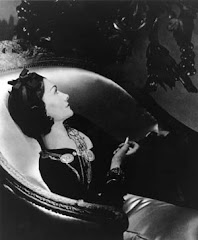

Monday, 18 February 2008


Dressing in tribes

Utterly fascinating piece about how we dress in tribes
There is a scene in Monty Python's Life of Brian where the eponymous hero addresses a vast crowd of devoted followers who have mistaken him for the Messiah. 'You are all individuals,' he shouts. 'Yes,' they reply with one voice. 'We are all individuals.'It is the sort of joke that delights Dutch photographer Ari Versluis, who has spent the last 14 years documenting the disconnection between our human desire to feel unique while also belonging to a greater whole. Since 1994, he and his stylist, Ellie Uyttenbroek, have travelled the world seeking to document the dress codes of different social and cultural groups. What they discovered was a series of modern fashion tribes - people who dress the same, often without even realising it.
Thought for the day

Clothes are never a frivolity: they always mean something, and that something is to a large extent outside the control of our conscious minds. James Laver
Sunday, 17 February 2008
Madame Gres - the couturier time forgot
My piece in today's Telegraph about Madame Gres
For many years I had heard the name Madame Grès and thought I knew who she was, for it conjured an image of one of the indefatigable Mayfair dressmakers who, from the 1930s to the 1950s, ran up copies of French fashions for well-dressed Englishwomen without the budget for the originals. But Madame Grès was the original, a Paris couturière to rival Lanvin and Chanel, once as famous as both of them. In her time she dressed Marlene Dietrich, the socialite Nan Kempner, Jacqueline Onassis and Barbra Streisand. That she is now forgotten, and her house merely a name in license held by a Swiss company, is a lesson in the difficulties of charting a course into the fashion history books.
Madame Grès photographed by Diane Arbus for 'Harper’s Bazaar' All clothes at some point take on the appearance of fancy dress before they are reincorporated into fashion again, but not hers. Looking at the dresses she made in the 1930s, one is struck not by their modernity but also by their timelessness. Influenced by the ideals of classicism, she made evening gowns that sculpted the human form, using techniques practised only by herself, a specialist skill known as draping, quite distinct from tailoring.
Why is she not better known? As a new book, Madame Grès: Sphinx of Fashion, reveals there were several reasons: because she made some disastrous business choices; because for the first part of her career she designed under another name and had to rebuild her reputation during the difficult circumstances of the German occupation; and because she never courted publicity. Working in complete solitude, she was 'more Garbo than Garbo', according to the fashion journalist Cathryn Horn. Only in the aftermath of her death and the bizarre revelations about her fate - she died penniless, forgotten, the announcement of her death suppressed by her daughter - did she come again to public attention.

Observer review
Vivien Kovaks comes from a family of 'mice-people', Jewish-Hungarian immigrants who arrived in 1938 and are simply grateful to England for giving them refuge. This is a novel about identity and belonging. There is nothing lightweight about its themes and yet it is so artfully constructed that you barely feel you're reading it at all, so fluid and addictive is the plot. But like all the best books, the serious ideas it raises stay with you for a long time afterwards.
. . .This is a wonderful, tightly written novel that charts one woman's emotional life while weaving in politics, history and morality. It does not come to any easy conclusions: the murderous Sandor is no less of a monster than his silently raging but impotent brother Ervin, who is sleepwalking through life. Ultimately, though, Sandor's defence does not wash; by choosing a path of violence and revenge, he descends to the depths of the fascists he hates.
Grant does not hit you over the head with politics, though. She transports you to another era and into another woman's life so gently and effortlessly that it is not until the end of the book that you realise the points she is making are universal and timeless. This novel is above all a quiet masterclass in the perils of hypocrisy. No man is all good or all bad. And a decent suit can make you overlook a lot.
more
Saturday, 16 February 2008
Scotsman interview
There's an interview with me in today's Scotsman newspaper, in which, among other topics, I speak of the readers of this blog:
Grant, who has been interested in clothes all her life, last October even started a blog, thethoughtfuldresser.blogspot.com, as a forum for intelligent discussion. It is subtitled: "Because you can't have depths without surfaces."
But isn't it dangerous, taking fashion seriously? Doesn't she run the risk of being dismissed as frivolous. Is it any sillier than talking about football, a topic near and dear to men's hearts? "Yes, it's identical. And the world wouldn't cease to exist if football ceased to exist; you can live without it, but you can't live without clothes.
"In terms of living without fashion, it's very difficult to find any society which has suppressed the interest in dress and clothing. The Puritans tried it for ten years – a complete failure. So they go to America and try to do it there and again it's a failure. It must be a deep human instinct to adorn the body, to change it through clothing. I would say that it's as central to our nature as a desire for art.
"I wanted to write about clothes the way women think about clothes. It's not the case that if we write about clothes we might as well write chick lit. Judith Krantz wrote the very first books that really talked about labels. She was good at portraying how people got dressed and what they wore at a given moment. I felt it was possible to incorporate that into literary fiction. I felt it was a subject generally neglected by male writers in the 20th century, because it's not manly. But we all wear clothes and most women are interested in them. In this novel clothes are at the centre of absolutely everything and at the heart of the book. It's asking questions about survival and how clothes affect a multitude of situations."
. . .
Her next project is a non-fiction book exploring why clothes matter and why we care about what we wear. To that end, her blog is partly a research tool. Via the comments section, Grant has discovered her readership comprises a highbrow crowd, women who work in embassies, in politics, even someone using a Nasa log-in. This doesn't surprise me at all, being an intelligent, fashion-curious gal myself. I can't wait to read this as-yet-unwritten book. In the meantime, I'll console myself with Grant's backlist.
read the rest
Daily Telegraph review
Naked we come into the world, and naked we leave it. Linda Grant, whose career spans both prize-winning fiction and journalism about fashion, has written a novel about the way clothes can offer a new beginning, even in the face of bereavement.
Transformers: clothes maketh the woman Vivien, her heroine, has lost both her husband and her father in one year. Dumpy and despondent, she passes by the boutique where Eunice, her Uncle Sandor's ex-mistress, is having a closing-down sale.
Her encounter with Eunice - and her discovery of her tapes of Uncle Sandor's memoirs - lead to an account of her past.
This includes her relationship with her immigrant Hungarian parents and her wicked Uncle Sandor - a rogue inspired by the slum landlord Peter Rachman, whom her father loathes, and forbids her to see: "My parents had brought me up to be a mouse. Out of gratitude to England, which gave them refuge, they chose to be mice-people, and this condition… was what they hoped for me too. And whatever Uncle Sandor was, he was no mouse."
This vivid, enjoyable and consistently unexpected novel is like Anita Brookner with sex.

Amanda Craig in the Daily Telegraph
Made in Italy?

In Harvey Nichols yesterday with my sister we came across the Alberta Ferretti dress I hope to have copied.
It's a stunning dress but, as my sister pointed out on close examination of it, do we really want to pay £895 for a garment whose side seam is puckered from under the sleeve to the bottom of the hem? And would one put up with that if one was having it made by a dressmaker?
Thought for the day

Diana Vreeland
Three-tenths of a good appearance are due to nature; seven-tenths to dress. Chinese saying.
Friday, 15 February 2008
London event
I will be doing one London event for The Clothes On Their Backs before leaving for Australia and New Zealand. The event is at Jewish Book Week* on Sunday 24 February, interviewed by Rachel Seiffert, whose first novel was shortlisted for the Booker.
Full details here
*You don't have to be Jewish
Fashion and conceptualism
 Christopher Kane
Jess Cartner-Morley, in the Guardian, one of Britain's most intelligent and thoughtful fashion editors (her degree is in history) says this of the shows at London Fashion Week:
I start with the designers' ideas rather than the clothes themselves because ideas, rather than clothes, were what this week's collections seemed to be about. If London fashion week was uncharacteristically commercial last season, this week it retreated back underground. Last season's blockbuster collections were replaced by arthouse looks that made little attempt to appeal to the mainstream.
And while new ideas are a necessity for a good fashion week, they don't make a good fashion week by themselves. Great catwalk moments are made when a designer can take an idea and turn it into clothes that are not only original and interesting but beautiful and desirable in their own right. Alexander McQueen and John Galliano are the current masters of this - but although both are British, stage their catwalk shows in Paris. One of the most promising students of this on the current schedule is Noki, who makes his collection entirely out of second-hand clothing, giving punch to his message of sustainability by creating fantastical catwalk pieces that are more haute couture than hair shirt.
The bad stuff happens when designers drape fabric on to models in order to represent their ideas in a literal way, instead of really setting their mind to thinking through how to make those ideas work as clothes. The result is that the catwalk looks like a bad puppet show. But the flipside of the cerebral attitude of London designers is that when the clothes do work - when they go the extra mile, add the touch of magic that transforms the ideas into real clothes - they tend to be much more interesting to look at than clothes in, say, New York, which are usually great for making your legs look long but not exactly food for thought. Christopher Kane, Todd Lynn, Sinha Stanic and Giles Deacon all hit the jackpot, delivering collections that felt like clothes, not concepts.
Independent review
Grant bravely explores – and exposes – such unfashionable viewpoints. Her novel is at once a beautifully detailed character study, a poignant family history and a richly evocative portrait of the late 1970s. The book's sole significant flaw is its failure to establish its extensive clothing imagery as the overarching metaphor for which it strives. Attempting a career as a literary journalist, Vivien summons "all the cruelty of the first-time reviewer trying to make her mark". This long-term reviewer has mellowed, for it is a joy to welcome such a vibrant and thought-provoking book.
more
Thought for the day
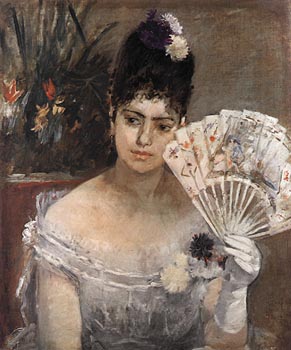
I should like my dress to be a poem about myself, my persona, the outward and visible presentation of my individuality. And that particular mode and fabric and manner which I should choose might not at all recommend itself to my next-dooor neighbour. Indeed, I hope it would not. For the loveliest and most human thing about humanity is the infinity of its types and modes of manifestation.
'A Girl Graduate'
Pall Mall Gazette 1884
Thursday, 14 February 2008
What you see is not what you get
Last week I wrote about Net a Porter's decision to sell two dresses from the previous day's Halston show on its site.
Cathy Horyn, the New York Times' fashion writer decided to order a dress having actually seen the show. And here's what happened:
The dress arrived Wednesday afternoon at the office. The delay didn’t really bother me. What’s one day compared to waiting five or six months, as you normally would for a fall 2008 dress. But I was disappointed with the dress. Although Net-a-Porter had clearly described the dress as wool jersey, I had seen the style in the show—and it was in sleek silk satin and a warmer tone. Further, the dress didn’t seem to be worth $1,495. Unlike the thousands of women who logged into Net-a-Porter, I had had the advantage of seeing the collection in the studio and on the runway, and the clothes had seemed more substantial to me. I was also having trouble seeing what distinguished this wool jersey dress from another designer make, and, frankly, I had been seduced by the silk version on the runway. It looked cooler. Also, the dress didn’t fit—that was my fault. I should have gone for the 42—or, anyway, something smaller. I looked a little schlumpfy, if you know what I mean.
The Halston’s wool jersey dress that Ms. Horyn ordered, size 44, from Net-a-porter. (Evan Sung for The New York Times)
Was this a case of bait and switch? Was the wool jersey shirt dress part of the runway collection or was it a so-called commercial look done specially for Net-a-Porter’s Halston sale?
A day or so later, I learned that the wool jersey dress was supposed to be on the runway—it’s listed, in fact, on the run-of-show—but at the last minute Marco Zanini, the Halston designer, had pulled it and substituted the satin shirt-dress. Zanini told me yesterday that he had switched dresses because there was already a lot of wool jersey on the runway—one of the long, draw-string evening dresses is in the same fabric, as is a teal gown.

what was on the runway
I also telephoned Bonnie Takhar, the chief executive of Halston, and shared my consumerist misgivings about the dress. She was concerned. She said the dress came from the same factory that had made the samples, so the quality should be identical. (Neither Takhar nor Massenet will say how large the initial Net-a-Porter was, but production and delivery of the garments from the factory took about 30 days, which Takhar said was normal.)
Anyway, I said to Takhar that, apart from the size, maybe the problem was the dress didn’t seem in the same stylish company as the other runway pieces, and not as flattering (to my eye) as the satin shirt dress. Obviously it would have helped if BOTH styles, the low-back draped shift and the jersey shirt dress, had been on the runway, given all the ballyhoo about the runway-to-consumer concept. Takhar agreed. She then offered to have my dress styled as it would have appeared on the runway.
Which Zanini did yesterday, using a size-44 model and pairing the dress with a sleeveless cashmere turtleneck and high suede boots. In Halston’s defense, it looked great—and better, I think, without the sash belt that comes with each dress. Net-a-Porter has sold out of the brown shirt dress, though it still has a size left in the teal, and Massenet told me last Friday that she had not heard any displeasure from customers.


Thank You, Anya Hindmarch

This is mine in caramel (above)
 This is it in cream
A courier has just arrived at my door with the currently waiting-list only Anya Hindmarch Cooper in caramel. I didn't even spot one at London Fashion Week, amongst the dozens of AH bags carried on the arms of the ingathered fashionistas.
Check it out here, or on Net a Porter or Saks.
Also delivered, in the nick of time for my Australia trip was an AH upright trolley just the right size to be an airline carry-on, as sold here, but in beige and gold.

Tribute to Saul Bellow
(pictured below contradicting the Thought for the Day)
On his death in 2005, I wrote:
Even if he was not writing, it was enough to know that Saul Bellow was alive and thinking. When I heard the news of his death on the radio on Wednesday morning, I screamed aloud in rage and sorrow because what Bellow had to tell us in his fiction was that it was worth it, being alive.His vigour, vitality, humour and passion were always matched by the insistence on thought, not the predigested cliches of the mass media or of those on the left which had began to disgust him by the Sixties. 'I knew that what you need in a big American city was a deep no-affect belt, a critical mass of indifference,' he wrote in Humboldt's Gift. The Bellow character kept insisting on the right to feel that something mattered, it was an entirely personal integrity, the keeping of the terms of a contract, which was to know. And those characters knew a lot - the social conditions of the tenements they grew up in, Aristotle, Tolstoy, Al Capone. How to dress, how to make love.
. . .
Bellow was a writer about conscience and consciousness, forever conflicted by the competing demands of the great cities, the individual's urge to survival against all odds and his equal need for love and some kind of penetrating understanding of what there was of significance beyond all the racket and racketeering.
In the Fifties, he shared a place with Arthur Miller in Nevada while they fulfilled the residency requirements to divorce their wives. Bellow would go out to the desert and practise the therapy of the moment, the primal scream. That was him: I want I want I want. The yearning soul, now, unbelievably, silent.
Further review
From The London Paper
The Clothes on Their Backs
Linda Grant
Virago, £17.99
Award-winning novelist, journalist and creator of the increasingly indispensable fashion blog thethoughtfuldresser.blogspot.com, Linda Grant returns with the story of the introspective yet passionate Vivien. Born to mild-mannered Hungarian refugees in 1953, she grows up in a red-brick Marylebone apartment wondering what the world might hold for her. While her parents are reluctant to explore either their surroundings or their emotions, Vivien becomes fascinated by the appearance of a flamboyant uncle at the doorstep one day – a curiosity only fuelled when her father refuses to speak of him again. Their inevitable reunion provides Vivien with an education that is as harsh as it is glamorous, as she develops an understanding that it's the clothes we wear as much as the secrets we keep that define us. As a portrait of London in the 20th century, a coming-of-age tale and an explanation of why fashion is more than just frocks, it's a sublimely atmospheric and deeply moving novel.
Alexandra Heminsley
In which I completely disagree with Hadley Freeman
 great length!
With regard to the former, the slim and straight tunics - essentially long dresses without sleeves - are easily commercial, while the low-slung tuxedo-style trousers were some of the most flattering pieces seen all week. On the downside, the below-the-knee hem lengths, often described euphemistically as "awkward", would make anyone under 5ft 10in look like a squat mushroom, a comparison only consolidated by the muted colour palette. If Virginia Woolf were alive today, and perhaps worked in a publisher's office, her wardrobe would be sorted.
Subscribe to:
Posts (Atom)