Because you can't have depths without surfaces.
Linda Grant, thinking about clothes, books and other matters.
Pure Collection Ltd.
Net-a-porter UK
Showing posts with label Zara. Show all posts

Thursday, 14 August 2008

The man behind Zara

Further to yesterday's post about Zara, there's another piece on its reclusive founder, Amancio Ortega Gaona. It's worth reading it all. Zara spends almost nothing on advertising, which itself keeps costs down. There is no 'face of'' Zara. As I said yesterday, I think its design is amazing, but the quality control is dire:


The 72-year-old son of a railway worker is now, according to Forbes, the seventh richest man in the world. He is astonishingly reclusive - only one known photo of him is in existence. He is thought to be deeply involved in all areas of the business, including design, but little is certain. Zara was one of the first to bulk-buy Chinese fabrics at a time when rivals dismissed them as of low quality. Zara legend has it that Ortega himself felt the cloth and made the decision, but as he has never given an interview we can't be sure.

He opened his first store in Galicia in 1975 and expanded slowly across Spain. In 1984, he met computer whizz Jose Castellano, who developed a production and distribution system that allowed clothing to go from drawing board to shop floor in as little as 10 days. Zara recruited a team of young designers - 200 at the last count - who created clothes inspired by the catwalk as well as adding their own ideas.

"So-called 'fast fashion' is now common in the high street," says Maureen Hinton, lead retail analyst at Verdict Research. "But before Zara arrived in the UK in 1999, all retailers offered three or four seasons. Zara introduces new stock every week, which caught our stores on the hop.""Zara has absolute control of the design, manufacturing and distribution process," explains Robert Clark, senior analyst at Retail Knowledge Bank. "Fifty per cent of its product is made in Spain, 26 per cent in the rest of Europe, and 24 per cent elsewhere. With others, 50 per cent or more is made in Asia. Fast-fashion items, roughly half its sales, are made in company-owned factories in Galicia. It's the basic T-shirt staples that are outsourced."

Although Zara owns its factories in order to speed up the process, this has also allowed it to dodge many of the sweatshop accusations that hound the likes of Primark - although in June it closed a textile supplier's factory in Dhaka over poor conditions, insisting that the factory introduce unions if it wanted to remain a Zara supplier.

Wednesday, 13 August 2008

Zara has overtaken Gap


In sales, that is, not style, which happened light years ago. But I have stopped buying Zara, however affectionately I remember its badly made dresses:

Unlike Gap, there isn't a definitive Zara look - it is so dedicated to following the twists and turns of fashion that its very lack of definition is key to its philosophy. It is as hard to pin down and as fast-moving as mercury. But it does do directional, it does great winter coats, (one of my most memorable buys was a bright yellow swing coat which reminded me of Courrèges in the Sixties) smart trenches and brilliant tuxedo evening trouser suits. It is capricious and fun. I don't always find something there, but I wouldn't dream of going more than a fortnight without a visit.

While Zara innovated, Gap never responded imaginatively to the arrival of the internet and its instant catwalk reports, or to the globalisation of production and demand. (Meanwhile, Zara was zipping from "inspiration" on a catwalk in Milan to a Zara production line in Spain and back to a store on the King's Road.) Or to the fact that we have all started dressing up more; we are all ladies who lunch now and, if necessary, invent events where we can dress up - just like Sex and the City - indeed the queues to get in to that movie were red-carpet gangs of girls wearing you-know-what.

Tuesday, 4 December 2007

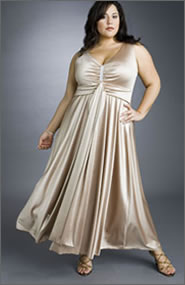
Can you dress well at any size? Poll results

The Thoughtful Dresser poll this week asked the question whether it is possible to dress well at any size. The results - 67 per cent said yes, only 32 per cent said not at my mall - show that most of you believe that style does indeed come from within. However a simple push button poll of this kind does not do justice to the complexity of the question.

The first thing to say is that being catwalk size is little guarantee of good taste. You can have Kate Moss' body and still look a mess if you have no eye for colour. Still, if you are size 0 and wealthy you can have a stylist do it for you, and every department store these days will have an in-house service to help you shop.

proportion

The first problem anyone above the so-called normal size range will confront is finding something to buy in the first place. The UK size range found in most high street shops is 8-14 (US 4-10) though of course the actual size of clothes will vary from store to store with a Top Shop 12 being considerably smaller than a Jaeger 12 because they size from a much younger fitting model. For purposes of disclosure, I'm in the top end of that range. I couldn't get into a Top Shop 14 but I do fit a 14 from M&S and Jaeger. This means that theoretically I should be able to walk into any high street shop and buy what I want. But take yesterday, when I saw a dress I rather wanted to try in Zara. There were plenty on the rack but they were all small and medium; when I asked a salesgirl for a large, she said they had sold out. Because the larger sizes always do (thought it is the opposite situation at M&S, I've frequently been told.)
good legs

Now if you are outside that 'normal' range life will become much more difficult. M&S' regular range goes up to size 22 and its Plus range to size 28 , increasingly on-line companies are getting much better at carrying a wide range of sizes, but if you want a choice of clothes, you'd better live in the USA. Gap and Banana Republic, both brands that I rate for style, go up several sizes. Until it opens its doors at the old Dickens and Jones building on Regent Street in 2008, we in Britain have never had access to Banana Republic, and their online site does not ship internationally. We've had Gap for several years, but recently, having bought a pair of jeans in their Friendship Heights branch in Washington, I asked in the flagship Oxford Street store if they had another pair. I was told that the stock was somewhat different, and one of the differences being that they did not sell larger sizes in Europe. Ask any plus size expatriate about buying clothes in France where no-one appears ever to gain any weight, and you will be told to go west, young woman, to America.
attitude!

As for clothes above say, size 22, there are fewer opportunities outside the US, fewer still at the higher end. Italian women will not stand for being badly dressed, and so it is Italy which has produced some of the better designer clothes in large seizes, such as Marina Rinaldi, one of MaxMara's labels. But it goes without saying that a larger woman will never be able to wear any of the major houses: no Chanel, no McQueen, no Dior, no Philip Lim, no Lanvin. Armani Collezioni goes up to UK 18, but I don't think its younger line, Emporio Armani does. Whenever I see Suzy Menkes, she seems to be wearing the expandable Issey Miyake Pleats Please or the now sadly defunct label Jean Muir.

That is not to say that larger woman do not look fabulous, or as the Manolo would say, superfantastic, of course they do, but it is my observation that larger women who look amazing generally have the characteristic of having bodies in proportion. It is far easier to look good if you are an hourglass than if you are a pear. Dressing really well is having clothes that fit you properly. In my case, a pear, (or as Trinny and Susannah now tell me, a skittle,) with a pronounced waist, big hips and narrow shoulders, I take a larger size in trousers than in tops, and dresses and jackets are often tight around the bum and loose on the shoulders and under the arms. Not a good look.
the right shoes

I have also noticed that larger women who are tall, and who carry the weight on their shoulders, chests and stomachs but who still have great legs, can look more elegant than the petite woman who carries it on her stomach, hips and thighs.

Nonetheless, having said all of this, it is the truth that if you can find something to buy, and if what you buy fits properly, it is the woman with the strong sense of inner style, with the iron self-confidence of a Beth Ditto, with the insistence that she will be seen, the woman who knows colour, who understands accessories, who has a sure feel for fabric and who will have no truck with the fascist nonsense that fashion is not for big girls, who will outshone the size 10 woman in an oatmeal fleece, beige drawstring trousers and Crocs.

UPDATE

My sister telephones to point out that one of the most heartening experiences is being at the gym and seeing a woman with a perfect, toned body and then watching the transformation in the changing room when she covers it up with boring, badly fitting clothes.
Thursday, 1 November 2007

What do these three men have in common?


A few years ago, I was having lunch at Moro in Clerkenwell Market with the then women's page editor of the Guardian. Sitting at the next table were a group of adoring acolytes hanging on the every word of a flat bloke with a blonde bristly head like a pig, dressed in combats encasing thighs which oozed like over-ripe Camembert sluggishly running off the edge of his chair.

That, said my lunch companion, is Alexander McQueen.

And a spasm of pure rage passed through me. Who was this fat bastard to tell women that they were obese if they couldn't fit into a size 10? To make clothes that half the population couldn't wear? I am tired of fat men telling non-skeletal women that they don't exist. Granted, McQueen, like Lagerfeld, with the assistance of the finest trainers money can buy and no obligation to prepare family meals three times a day, have slimmed down, or in the case of Lagerfeld, turned himself into his own corpse, but fashion is full of fat men (sorry Alber, I really love you in every other way) giving normal-sized women an inferiority complex.

I had my picture take a couple of weeks ago to go with a magazine piece I'm doing . There was a photographer, a picture editor, a make-up artist and the manager of Hobbs all involved in this operation, and after the make-up artist had bemoaned that she couldn't find a pair of trousers to fit her in Zara, the photographer said that one her friends was a plus-sized model. 'What's plus size?' I asked. It's size 12 (US8) she told me.

Myself, I'd put every man in fashion who weighs over 150 pounds on the Atkins diet. And don't come back until you can fit into skinny jeans.